Liquid Death Sold Water by Refusing to Look Like Water
Liquid Death turned plain water into a $333M brand with a $1,500 test video. Here is the system, the numbers, and what a Canadian business can steal.
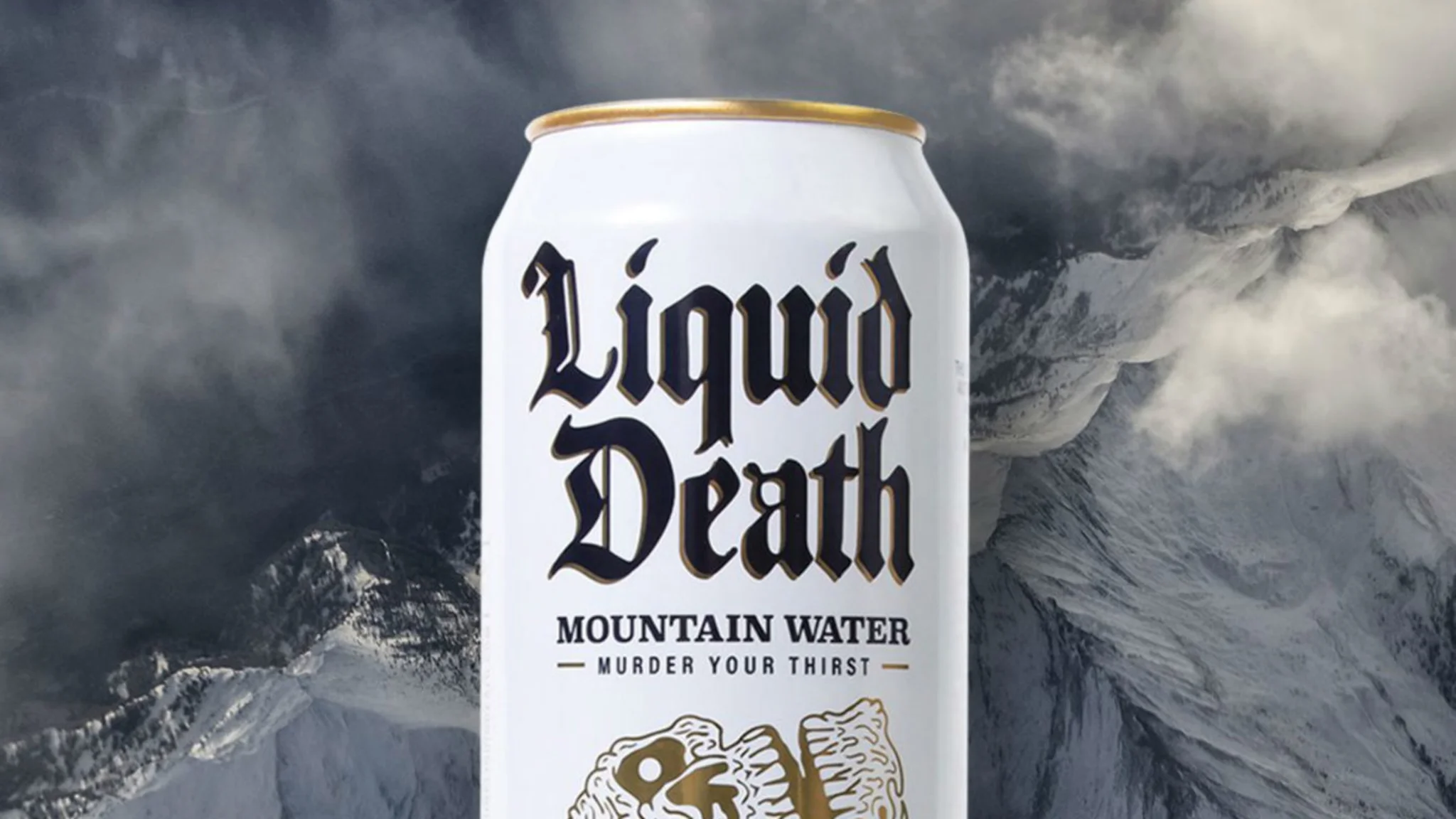
Liquid Death sells mountain water in a tallboy can that looks like beer, under a name that sounds like a metal band. Revenue ran from $45 million in 2021 to an estimated $333 million in 2024, and the company was valued at $1.4 billion in March 2024. It started with a $1,500 fake commercial for a product that did not exist. The lesson is simple: test the brand before you build the product, and let entertainment sell it. Here is the system behind it.
/1 The problem
Water is the most boring product on a shelf. It has no taste story and no reason for anyone to talk about it. Founder Mike Cessario saw the gap in 2009 backstage at the Vans Warped Tour, where bands hid water inside Monster Energy cans. The fun marketing all went to products that were bad for you.
Investors laughed and retailers said no: a can that says Death looked like beer. The category's rule was that water must look safe. Cessario read that rule as the opportunity.
/2 The move
Cessario tested the brand before he built the product. In 2018 he made a Facebook page dressed to look like a real brand, shot a two-minute commercial for $1,500, and put a few thousand dollars of paid media behind it. The can in the shot was a Miller Lite, angled so viewers could not see the label.
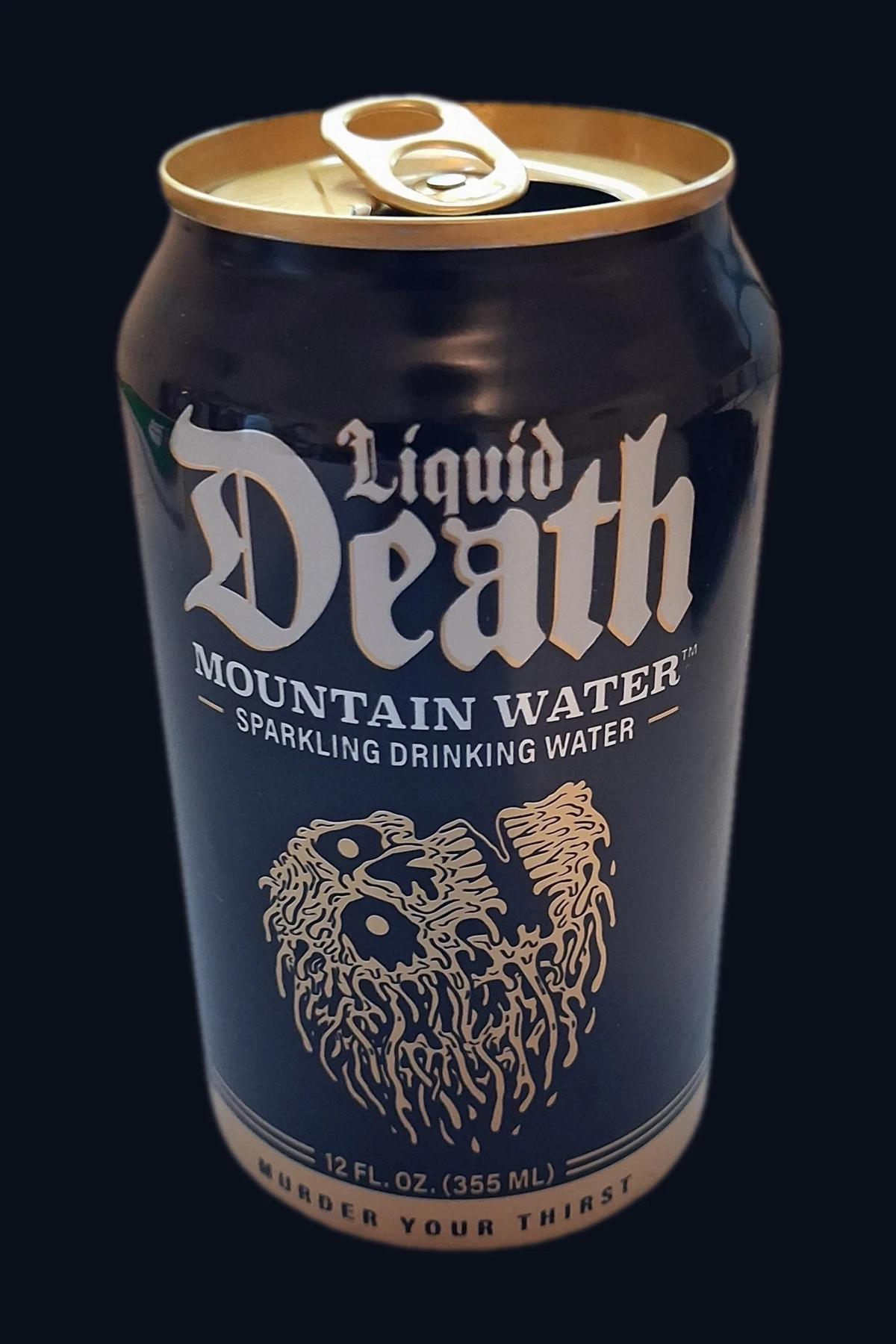
His brief to himself was one line. Take the healthiest thing you can drink and brand it like the least healthy. The can became a tallboy with gothic lettering, a melting skull, and the tagline "Murder Your Thirst."
/3 The mechanism: entertainment is the product
Cessario describes the company the same way in every interview: "We're an entertainment company that monetizes via beverage." The marketing does not feel like marketing. It feels like a show, and the can is the ticket.
A team small enough to fit in a large SUV runs its own production company, Death Machine, and shoots fast and cheap. Cessario says no video costs more than $100,000 to $150,000, even now, with revenue near $300 million a year. The rule is a portfolio of cheap jokes: fund what breaks out, kill the rest. Every piece must be worth watching on its own before it ships.
The jokes carry the brand from person to person. A Tony Hawk video where a phlebotomist draws his blood and mixes it into paint for 100 limited skateboards cost about $10,000 to film, and Cessario estimates it brought in $15 million of earned media. The boards sold for $500 each and sold out in under 20 minutes.
/4 The mechanism: distribution converts the attention
Content earns the attention. Retail converts it. Liquid Death did not buy shelf space first and then try to get noticed. It got noticed first, then let retailers come to it.
Whole Foods said yes in February 2020 and the water became the fastest-selling water brand on its shelves. In May 2021, a $15 million Series C round brought Live Nation in as an equity investor, and Live Nation made Liquid Death the exclusive water at its events. By 2025 the brand was in more than 133,000 retail doors.
The can does the last part of the job: a tallboy that looks like beer gets carried into bars and concerts, places a plastic bottle never goes. Fans do the rest: 225,000+ joined the Country Club, and merch brought in roughly $3 million a year by 2023.
/5 The test
The 2018 Facebook page was a test, not a launch: one video, $1,500 to produce, $5,000 in paid media over four months, with a comparison built in. Aquafina, a real product with real distribution, had fewer Facebook followers at the time. Liquid Death had no product at all.
Four months in, the video had 3 million views and the page had about 80,000 followers. Strangers and retailers asked where to buy it. That demand raised a $150,000 friends-and-family round, then a $1.6 million seed round from Science Inc. in January 2019. The first cans went on sale that month, from a first run of 250,000 cans costing roughly $200,000.
Our math: $6,500 for about 80,000 followers is roughly 8 cents per follower, before a single can existed. The test answered whether people wanted this brand.
/6 The results
Revenue, estimated by Sacra, ran $45 million in 2021, $110 million in 2022, $263 million in 2023, and $333 million in 2024, up 27% year over year. Mid-2025 investor materials projected roughly $340 million for 2025. Valuation doubled from $700 million in October 2022 to $1.4 billion in the March 2024 Series E, a $67 million round. A teardown by Playbook Index puts marketing near 12% of revenue, against 20-30% for the category.
.
The number that shows new demand is the $333 million in 2024 revenue.
| Area | Score | Evidence |
|---|---|---|
| Brand | 10/10 | One name, one skull, one tagline, from a $1,500 test to a $1.4B valuation. |
| Offer | 7/10 | Plain mountain water; the premium is the can and the joke. |
| Creative | 10/10 | Cheap jokes built to be sent to a friend, none over $150,000 by Cessario's own cap. |
| Distribution | 9/10 | 133,000+ doors by 2025, after attention came first. |
| Retention | 8/10 | 225,000+ Country Club members; merch worth roughly $3M a year by 2023. |
/7 What happened next
New lines kept coming: sparkling water in 2020, flavoured sparkling in January 2022, teas in 2023, energy drinks in January 2026.
Growth is cooling after triple-digit early years, down to 27% in 2024. A December 2024 secondary transaction implied a valuation near $943 million, below the $1.4 billion headline. In April 2026 Cessario said the company was on track for close to $300 million in revenue for 2026, after mid-2025 investor materials had projected roughly $340 million for 2025.
What a Canadian business should steal
Liquid Death is still not officially distributed in Canada (it was not available here as of June 2025), yet import shops in Saskatoon list single 568 ml cans at $4.99 to $5.99 CAD, and a Chatham, Ontario brewhouse lists a can at $4.50. Demand crossed the border before distribution did.
Test the brand before the product. Shoot one cheap ad for the brand you want to be, show it to strangers, and measure follows and signups against a category benchmark. Our Duolingo case study ran the same play.
Borrow codes from a fun category. A coffee roaster can package like a craft brewery, a contractor can brand like a sports team, a clinic can talk like a gym.
Make content people send to a friend. Before you post, make sure someone would watch it even if it were not an ad. If they would not, it is not content.
Let distribution convert the attention. Liquid Death earned the attention first, then let Whole Foods and Live Nation do the selling. The Canadian version is the same shape. Our social media marketing work starts from that order.
What not to copy
Skip the skull and the shock. It works for a water brand aimed at metal fans. It dies on contact with a family business or a clinic. Borrow the codes, not the costume.
Skip the stunt scale too. The Tony Hawk boards only worked because millions already knew the brand. A small business that spends its whole budget on one stunt buys one day of attention and no repeat customers. A portfolio of cheap tests is the strategy.
Verdict
Test the brand for $1,500 before you build the product, borrow the codes of a category people already love, and only scale the jokes strangers send each other.
Ready to Transform Your Marketing?
Let Laxia help you implement these strategies and drive real results for your business.
Related Articles
Duolingo paused its unhinged posts in 2025 and told shareholders daily user growth slowed. The lesson for Canadian brands is character consistency.
Tim Hortons keeps its Canadian restaurants busy with a loyalty program, a February contest, and a spring charity cookie. Here is how the system works.
Three short videos a week, filmed in one 90-minute session every second week, built from customer questions.